On a busy Union County jobsite, debris piles up faster than most crews expect. A single kitchen gut, a roof tear-off, or a foundation pour can generate several tons of mixed construction and demolition (C&D) waste in a matter of hours. How you handle that material is not just a housekeeping detail. It affects your budget, your inspection timeline, your neighbors in a new subdivision, and whether you stay on the right side of North Carolina disposal rules. With the Charlotte-metro building boom pushing new construction across Monroe, Indian Trail, Waxhaw, and Weddington, contractors who master debris disposal finish faster and cleaner than those who don't.
This guide walks through disposing of construction debris the right way: sorting C&D materials, choosing the correct roll-off, understanding weight limits and tipping fees, recycling what you can, and scheduling swaps so a full container never stalls your schedule.
Know Your C&D Debris Before You Toss It
Construction and demolition debris is not one thing. It is a mix of materials that behave very differently in a dumpster and at the transfer station. The first step to disposing of it correctly is knowing what you're actually throwing away. On most Piedmont NC remodels and new builds, your waste stream breaks down into a handful of recurring categories.
- Wood: framing lumber, plywood, trim, subfloor, and pallets. Bulky but relatively light, and often recyclable or mulchable.
- Drywall: gypsum board scrap from hangs and repairs. Lightweight, but it crumbles and takes up volume fast.
- Roofing: asphalt shingles, felt, and flashing from tear-offs. Deceptively heavy, one square can weigh a few hundred pounds.
- Metal: ductwork, conduit, rebar offcuts, flashing, and old appliances. Almost always recyclable and sometimes worth money.
- Concrete, brick, and block: the heavyweights of any load, and abundant here thanks to Union County's red-clay soils and slab-heavy new construction.
Mixing everything into one bin is easy, but it costs you when the material is heavy or recyclable. Separating clean concrete and metal from the general C&D stream is where most of the savings live.
Sorting on the Jobsite: Small Effort, Real Savings
Sorting sounds like extra work, but a little organization on the front end keeps disposal costs predictable and keeps inspectors happy. The goal is to keep the heaviest and the most recyclable materials out of your general debris container.
Set Up Simple Sort Zones
You don't need an elaborate system. Stage a clean-metal pile near where the HVAC and electrical scrap accumulates, keep concrete and masonry rubble together, and route wood, drywall, and general debris into the roll-off. On a tight infill lot in downtown Monroe you may only have room for the container and one staging area, so prioritize pulling out metal (it has resale value) and concrete (it drives up weight).
Why It Pays Off
Clean loads of a single material are cheaper to dispose of and often recyclable at reduced rates. A mixed load that's secretly full of concrete blows past its weight allowance and triggers overage fees. Sorting also keeps a jobsite compliant and safe. Loose nails, jagged metal, and scattered shingles are trip hazards and OSHA flags, and a tidy site reads as a professional one to the homeowner or GC signing your checks.
Roll-Off vs. Dedicated Heavy-Debris Bins
Not every dumpster is built for every load. Choosing the right container is the single biggest factor in avoiding surprise costs on heavy Piedmont material.
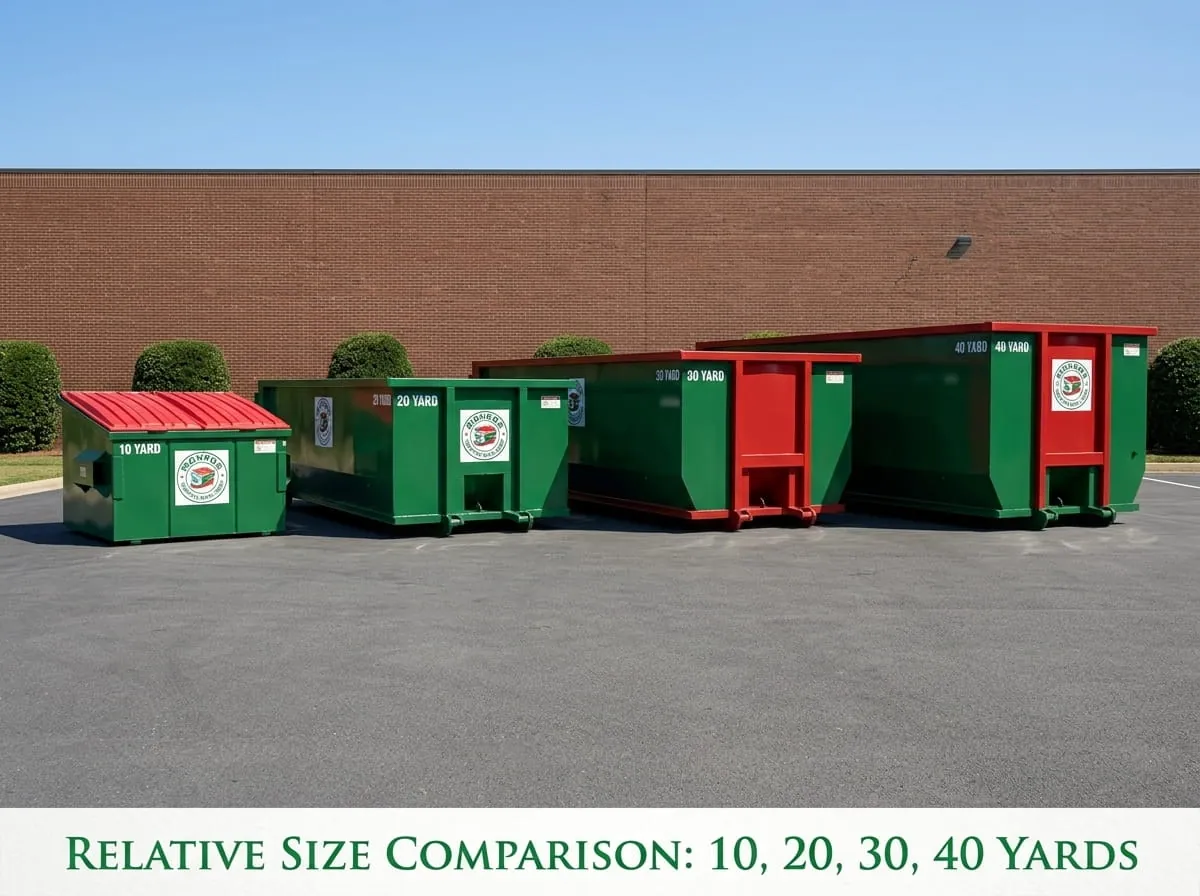
A standard roll-off is the workhorse for general C&D debris. For framing scrap, drywall, roofing, siding, insulation, and mixed remodel waste, a 20-, 30-, or 40-yard roll-off gives you the volume to keep a crew moving. Our construction dumpster rental service is sized exactly for these jobs, with flat-rate pricing so you know the number before the container hits your driveway.
But volume isn't the issue with concrete, brick, block, dirt, and asphalt. Weight is. Fill a big roll-off with red-clay-laden concrete and you'll exceed both the legal road weight and the container's rating long before it looks full. That's what dedicated concrete and heavy-debris bins are for. These are smaller, purpose-built containers, typically 10 to 12 yards, that hold dense material safely and are often billed against a clean-concrete recycling stream. For a foundation demo or a driveway tear-out in Waxhaw or Wesley Chapel, a heavy-debris bin is almost always the right call.
Weight Limits, Tonnage, and NC Tipping Fees
This is where contractors get burned. Every roll-off comes with a weight allowance, usually expressed in tons and baked into your flat rate. Go over it and you pay for the excess by the ton, plus you risk an overloaded container the hauler legally can't move.
North Carolina C&D debris is disposed of at permitted C&D landfills and transfer stations, and those facilities charge tipping fees by the ton. Union County and the greater Charlotte metro see steady demand, and dense local material makes tonnage add up quickly. A few realities to plan around:
- Concrete and masonry are extremely dense. A half-full bin of block can weigh more than a heaping load of wood and drywall.
- Wet material weighs more. Piedmont red clay and debris left open to a summer thunderstorm soak up water and gain tonnage fast, so cover or swap promptly.
- Roofing tear-offs are heavy. Asphalt shingles can push a 20-yard bin to its limit at a fraction of its visual capacity.
The fix is matching the container to the material and being honest about weight up front. A flat-rate provider who knows Monroe and Union County disposal can size the bin correctly and steer heavy loads into the right container so you avoid overage surprises entirely. When you're unsure, a quick call before you order saves money.
C&D Recycling and Staying Compliant
Disposing of debris the right way increasingly means diverting what you can from the landfill. A large share of C&D material is recyclable, and separating it out lowers both your disposal cost and your project's footprint.
- Concrete and masonry can be crushed into aggregate and reused as fill or base, which is a big win on the region's constant new-subdivision work.
- Clean wood is chipped for mulch or biomass rather than buried.
- Metal of nearly every kind is fully recyclable and holds scrap value.
- Cardboard and packaging from new fixtures and appliances recycle easily when kept dry and separate.
Compliance goes hand in hand with recycling. Some materials, like appliances with refrigerants, certain electronics, tires, and hazardous items such as paint, solvents, and asbestos, cannot go in a standard C&D roll-off and must be handled through the proper channels. Keeping these out of your bin protects you from rejected loads and fines, and keeps your jobsite clean and inspection-ready. When in doubt about whether something belongs in the container, ask before you toss it.
Scheduling Swaps to Keep on Schedule
A full dumpster is a stopped jobsite. In the fast-moving Charlotte-metro market, where trades are stacked back to back on new builds, waiting on an empty container can throw off an entire week. Smart swap scheduling keeps the debris flowing and the crew productive.
Time Swaps to Your Phases
Line up container swaps with your project phases: order the tear-out bin for demo week, swap to a fresh container before framing scrap starts piling up, and schedule a final haul-off for punch-list and packaging debris. On multi-house subdivision work, rotating containers between lots keeps every crew moving without paying for bins that sit idle.
Call Ahead and Keep Access Clear
Same-day and next-day swaps are realistic when you plan a day out. Keep the container accessible, don't overfill past the rails, and make sure trucks and materials aren't blocking the roll-off. A flat-rate, call-only provider makes this simple, one call to (980) 446-2528 gets a swap on the schedule without runaround.
Disposing of construction debris the right way comes down to sorting smart, matching the container to the material, respecting weight limits, recycling what you can, and swapping on time. Do that, and your Monroe or Union County jobsite stays clean, compliant, and on schedule. Ready to line up the right dumpster for your project? Call Monroe Dumpster Rental Group at (980) 446-2528 or reach out here for flat-rate roll-off and heavy-debris service across Monroe, Union County, and the Charlotte metro.
Founder, Monroe Dumpster Rental Group — sharing straight advice from more than 15 years of local hauling experience.