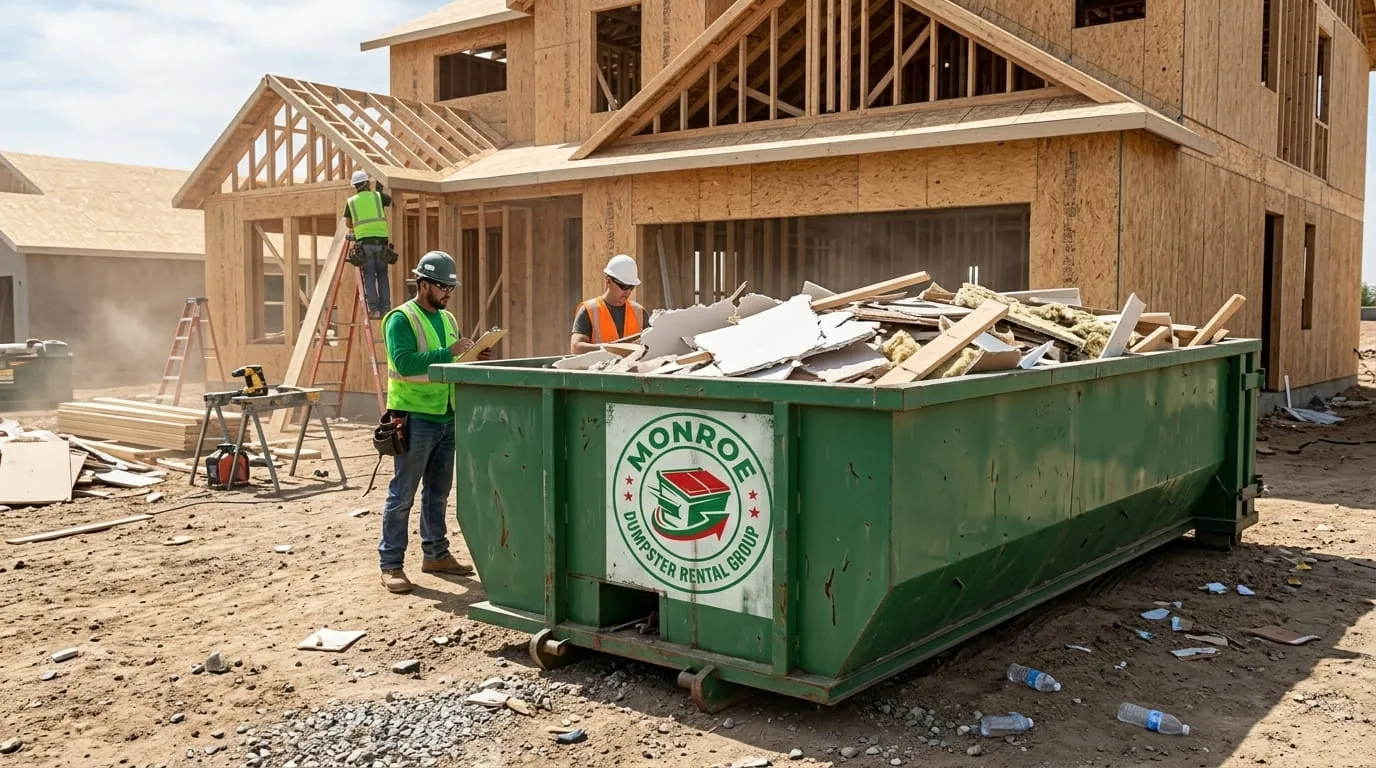
Whether you are clearing out a garage in downtown Monroe, tackling a kitchen remodel near Indian Trail, or managing debris from a new build in one of Union County's fast-growing subdivisions, knowing where your waste actually goes makes the whole job easier. Monroe and Union County have a well-organized system for handling trash, recycling, yard debris, and the trickier materials that cannot simply be tossed in a bin. This local guide walks through how it all fits together, what North Carolina law keeps out of the landfill, and where renting a roll-off dumpster makes the most sense for bigger projects.
How Waste and Recycling Work in Monroe and Union County
Residents inside the City of Monroe typically receive curbside collection through the city's environmental services, which usually includes weekly household trash and curbside recycling. Outside city limits, in the unincorporated parts of Union County and smaller towns like Wingate, Marshville, Waxhaw, and Stallings, service arrangements vary. Many rural households rely on Union County convenience sites and transfer stations to drop off both regular household waste and recyclables.
These convenience and transfer sites are the backbone of the county's diversion effort. They accept sorted recyclables such as cardboard, mixed paper, plastics, glass, and metal cans, and many also take specific hard-to-handle items on designated days. Because collection days, accepted materials, and site hours change from time to time, always confirm the current details directly with the City of Monroe or Union County solid waste before you load up the truck.
The reason the system leans so heavily on diversion is cost and capacity. Every ton kept out of a lined landfill through recycling, composting, or reuse extends the life of regional disposal capacity and helps hold down the fees passed along to residents. That is why you will find so many separate streams: one for mixed recyclables, one for yard debris, one for scrap metal and appliances, and separate handling for electronics and hazardous materials. Understanding those streams up front is the single best way to keep a project on schedule.
What Belongs in a Dumpster and What Does Not
A roll-off dumpster is built for the bulk of what a renovation, cleanout, or construction project generates. That said, not everything can legally or safely ride to the landfill in a container. Knowing the difference before you start saves you from rejected loads, extra fees, or a return trip to a drop-off site.
Generally accepted in a roll-off dumpster
- Construction and demolition debris such as drywall, lumber, flooring, and roofing shingles
- Household junk, furniture, cabinetry, and non-freon fixtures
- Bagged general trash from cleanouts and estate clearing
- Boxes, packing material, and mixed non-hazardous waste
Keep these out of the dumpster
- Electronics banned from the landfill, including TVs and computers
- Tires, wet paint, motor oil, and automotive fluids
- Appliances containing refrigerants, like fridges and air conditioners
- Batteries, fluorescent bulbs, and household chemicals
If your project mixes ordinary junk with a few of these restricted items, a combined approach often works best. You can pair a dumpster with a dedicated junk removal service to divert the banned pieces to the right facility while the container handles everything else.
North Carolina Landfill Bans You Need to Know
North Carolina has enacted a series of statewide disposal bans over the years to keep recoverable and hazardous materials out of lined landfills. These rules apply everywhere in the state, Monroe and Union County included, and reputable haulers will not knowingly bury banned items. The most important category for homeowners is electronics, or e-scrap: televisions and computers, including monitors, laptops, and their peripherals, are banned from disposal and must be recycled instead.
Other materials that North Carolina bans from landfill disposal include:
- Whole scrap tires, which must go to a permitted tire recycling program
- Used oil, oil filters, and antifreeze
- Lead-acid and rechargeable batteries
- Aluminum cans, recyclable rigid plastic bottles, and certain other beverage containers
- White goods, meaning large appliances
- Yard trash and clean wood at lined landfills, where it is instead composted or ground into mulch
Because the exact list and enforcement details evolve, treat this as a starting point and verify current bans with Union County solid waste. The key takeaway is simple: if an item is recyclable, hazardous, or reusable, the state generally wants it diverted rather than dumped.
Handling the Tricky Stuff: E-Waste, Tires, Appliances, and Hazardous Materials
The materials that cause the most confusion are the ones that require special routing. Here is how the main categories are typically managed locally.
Electronics and e-waste
Old TVs, monitors, desktops, laptops, printers, and similar gear should go to an electronics recycling drop-off rather than the trash. Union County periodically offers e-scrap collection, and retailers and nonprofit recyclers in the Charlotte metro also accept many devices. Wipe personal data first.
Tires and appliances
Scrap tires are accepted at convenience sites in limited quantities, often with a per-tire fee. Large appliances, known as white goods, are collected separately so that refrigerants and scrap metal can be recovered. A refrigerator or freezer usually needs its coolant professionally removed before the metal is recycled.
Household hazardous waste
Paint, solvents, pesticides, pool chemicals, motor oil, and similar products are classified as household hazardous waste and should never go in a dumpster or down a drain. Union County runs collection opportunities for these materials, so hold onto them until an accepted drop-off date. When in doubt, call ahead and describe what you have.
Yard Waste, Bulky Items, and Union County's Growth
Union County sits on the rapidly developing edge of the Charlotte metro, and the wave of new subdivisions and HOA communities has changed how a lot of households deal with debris. Land clearing, fresh landscaping, and mature Piedmont trees dropping limbs after summer storms all generate serious volumes of yard debris that curbside bins were never meant to hold.
Yard trash is banned from lined landfills in North Carolina, so leaves, brush, grass, and limbs are steered toward composting and mulching instead. Monroe and the county provide seasonal and ongoing options for leaf and limb management, and many convenience sites accept yard debris for grinding into mulch. For large-scale clearing, storm cleanup, or a full landscape overhaul, a dedicated yard waste removal service or a roll-off dumpster sized for organic debris keeps the project moving without dozens of trips to a drop-off site.
Bulky items such as old furniture, mattresses, and non-freon appliances are another common headache in growing neighborhoods. Some can go in a dumpster, some are collected on scheduled bulky-pickup days, and a few must be diverted. Confirming the rules for your specific address prevents surprises on collection day. Many HOA communities also set their own guidelines on how long a container or debris pile can sit curbside, so it is worth a quick check with your association before a big cleanout.
When a Roll-Off Dumpster Is the Right Call
Convenience sites and curbside service handle everyday volumes well, but they are not built for the debris a real project throws off. That is where a roll-off dumpster earns its keep. If you are gutting a bathroom, re-roofing, clearing an estate, cleaning out a rental, or prepping a lot for construction, a single container on your driveway is far more efficient than repeated runs across the county.
At Monroe Dumpster Rental Group, we keep it simple with flat-rate, call-only service for Monroe, Union County, and the surrounding Charlotte metro. You get a straightforward price, a container sized to your job, and local guidance on what can and cannot go inside so you stay on the right side of North Carolina's landfill bans. For items that must be diverted, we can point you toward the correct drop-off so nothing slows you down. A flat rate also means no guessing at the end of the job: you know the cost before the container ever hits your driveway, which makes budgeting a renovation or cleanout far less stressful.
Ready to tackle your project the easy way? Call our team at (980) 446-2528 for a fast, flat-rate quote, or reach us through our contact page and we will help you choose the right dumpster for the job.
Founder, Monroe Dumpster Rental Group — sharing straight advice from more than 15 years of local hauling experience.