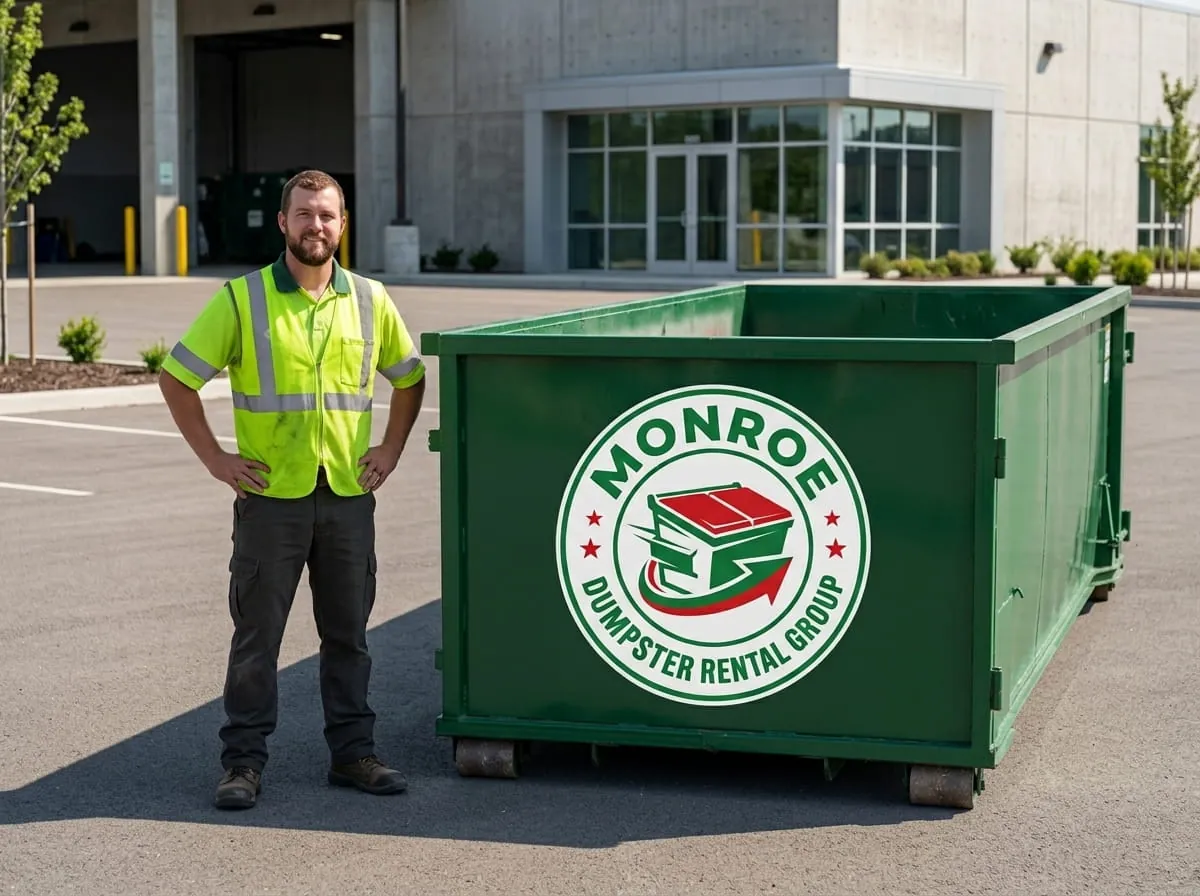
It is one of the most common questions we hear at Monroe Dumpster Rental Group: "What size dumpster do I need?" It sounds simple, but guessing wrong is what turns an easy weekend project into a frustrating (and pricier) one. Order too small and you are calling for a second haul or watching debris pile up in the driveway. Order too big and you are paying for empty air. This guide walks through our four most popular roll-off sizes, the real Monroe and Union County projects each one handles, and the weight math that trips up so many homeowners working with our heavy Piedmont red clay.
We keep things simple with flat-rate pricing and a call-only booking process. If you would rather just describe your project to a human, skip the reading and call (980) 446-2528 — we size jobs over the phone every day. But if you want to understand the "why" behind the recommendation, read on.
How Dumpster Sizes Actually Work: Cubic Yards vs. Weight
Roll-off dumpsters are measured in cubic yards, which describes volume, not weight. A "20-yard" dumpster holds roughly 20 cubic yards of material when filled level to the top. To picture a cubic yard, imagine a cube three feet on every side — about the volume of a standard washing machine. So a 20-yard container is like fitting roughly 20 washing machines' worth of debris into one steel box.
But volume is only half the story. Every dumpster also carries a weight limit, usually expressed in tons, and this is where Union County projects get tricky. Our region sits on dense red clay soil, and materials like dirt, concrete, brick, roofing shingles, and plaster are deceptively heavy. You can fill a 10-yard box only a third of the way with wet clay or old brick and already hit its weight cap. Light debris — cardboard, furniture, drywall, yard trimmings — fills the space before it ever approaches the weight limit.
The rule of thumb we give every customer: choose your volume for bulky, light debris, and choose your weight allowance for dense, heavy debris. When a project mixes both, tell us, and we will match a container and weight limit that keeps you clear of overage fees. You can see the full lineup on our services page.
The 10-Yard: Small Cleanouts and Heavy Materials
The 10-yard roll-off is our smallest and most maneuverable container. Typical dimensions run about 12 feet long, 8 feet wide, and 3.5 feet tall, which means it tucks neatly into a single-car driveway or a tight subdivision lot without blocking the whole street. It is the go-to for compact jobs and for anything dense.
Real projects that fit a 10-yard:
- A single-room cleanout — clearing out one bedroom, a home office, or a packed spare room
- A small bathroom demolition down to the studs
- Up to roughly 1,500 square feet of single-layer roof tear-off shingles
- Concrete, brick, or dirt removal from a small patio or walkway
Because our Piedmont brick and clay are so heavy, the 10-yard is often the smart choice for weight-limited jobs even when it looks small. A homeowner tearing out an old brick-ranch chimney base or a concrete stoop will hit the weight cap long before they fill the box, so a larger container would just waste money. It is also the friendliest option for narrow older neighborhoods around downtown Monroe where driveway and street space are at a premium.
The 15- and 20-Yard: The Remodel Sweet Spot
If there is a "default" size for the average Monroe homeowner, it lives in this range. The 15-yard (about 16 feet long, 8 feet wide, and 4 feet tall) and the 20-yard (about 22 feet long, 8 feet wide, and 4.5 feet tall) handle the vast majority of household remodels and cleanouts we serve across Union County.
Reach for a 15-yard when you are tackling:
- A single-room remodel — a kitchen refresh or a mid-size bathroom gut
- Flooring removal across several rooms
- A moderate garage or attic cleanout with some furniture
Step up to the 20-yard, our most popular size, for:
- A full kitchen remodel with cabinets, countertops, and appliances
- A large brick-ranch renovation touching multiple rooms
- A two-car garage or whole-basement cleanout
- Up to roughly 3,000 square feet of roof tear-off
- Deck removal or a mid-size landscaping overhaul
The 20-yard hits the sweet spot because it holds serious volume while staying low enough to load easily by hand — you are not heaving debris over a tall wall. For most classic Union County brick-ranch remodels, where you are pulling out old cabinetry, flooring, and fixtures across several connected rooms, this is the container we recommend first. It gives you breathing room without the height that makes loading a chore, and it still fits comfortably in a standard suburban driveway. Learn more on our dedicated 20-yard dumpster page.
The 30-Yard: Whole-Home and Construction Jobs
When the project scales up, so does the box. The 30-yard roll-off measures roughly 22 feet long, 8 feet wide, and 6 feet tall — same footprint as the 20-yard but half again as deep, giving you far more room for bulky, lighter material.
The 30-yard earns its keep on jobs like:
- A whole-home cleanout — an estate clearout or a full foreclosure turnover
- Major additions and large multi-room remodels
- New construction and framing debris
- Large HOA subdivision common-area cleanouts and community projects
- Full demolition of a shed, detached garage, or outbuilding
We field a lot of calls from HOA boards and property managers across Union County's growing subdivisions who need to clear a foreclosed property or reset a common area fast. The 30-yard lets a crew keep working without stopping to swap containers. One caution, though: because it is so tall and roomy, it is easy to overload with heavy debris. Never fill a 30-yard with concrete, dirt, or brick — those belong in a 10- or 15-yard where the weight limit protects you.
How to Avoid Over-Sizing and Under-Sizing
Getting the size right comes down to a few honest questions about your debris. Ask yourself:
- What is the material? Heavy (concrete, brick, clay, shingles, tile) points you smaller; light and bulky (furniture, drywall, cardboard, wood) points you larger.
- How much of it? Estimate by rooms or square footage, then add a cushion — projects almost always generate more debris than people expect once demolition starts.
- Is it a mixed load? Mixing a little heavy debris into a big light load is fine, but tell us the ratio so we set the right weight allowance.
The single most common mistake we see is under-sizing to save a few dollars. A second haul-out almost always costs more than simply renting one size up from the start. When you are genuinely torn between two sizes, going one size larger is the cheaper insurance. The opposite mistake — renting a 30-yard for a job that a 15-yard would swallow — wastes money and driveway space.
When in doubt, describe the project to us. A quick, honest conversation about what you are throwing away is worth more than any online calculator, because we know how our local red-clay and brick debris behaves on the scale. Reach out through our contact page or just call and we will point you to the right box in a minute or two.
Still Not Sure? We Will Size It For You
You do not have to become a dumpster expert to rent one. That is our job. Tell us the project — a brick-ranch kitchen gut, a subdivision cleanout, a roof tear-off, a whole-home clearout — and we will match you with the right size and weight limit, quote you a flat rate with no surprises, and get a clean roll-off in your driveway. No hidden fees, no guessing games. Call Monroe Dumpster Rental Group today at (980) 446-2528 and let's get your project moving.
Founder, Monroe Dumpster Rental Group — sharing straight advice from more than 15 years of local hauling experience.