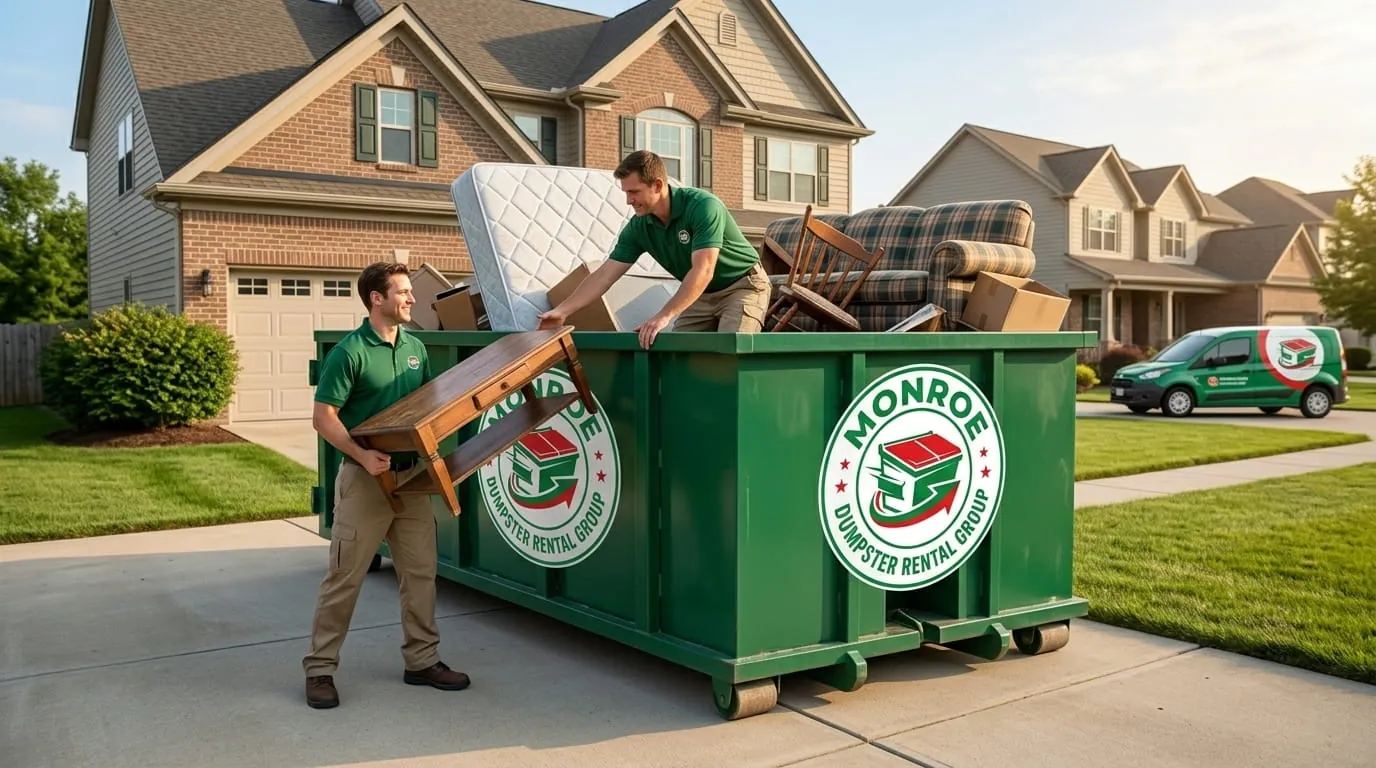
A whole-home cleanout can feel overwhelming until you break it into rooms. Whether you are clearing a brick ranch on the outskirts of Monroe, prepping a family home in Union County for sale, or finally reclaiming a garage that swallowed a decade of stuff, the trick is a repeatable system: work one room at a time, sort into keep, donate, and toss, and stage your debris so a single roll-off dumpster does the heavy lifting. This room-by-room checklist walks you through every zone of a typical Piedmont home, with local touches for our humid climate and crawlspace-heavy housing stock, so you can move from cluttered to clear without stalling out halfway through.
Before You Start: Plan Your Monroe Home Cleanout
Momentum matters. Before you touch a single box, gather supplies and set the rules so decisions stay fast and consistent throughout the house. A good cleanout is 20 percent lifting and 80 percent deciding, so remove friction from the deciding part. Block out a realistic window, recruit a helper or two, and stage a staging area near the driveway where sorted piles can wait for loading.
Supplies and Ground Rules
- Three-pile system: designate clearly marked zones for Keep, Donate/Sell, and Toss. Use contractor bags for trash and sturdy boxes for donations.
- The 12-month rule: if you have not used it in a year and it holds no real sentimental value, it goes to donate or toss. Do not relitigate every item.
- Work top to bottom, back to front: start with the attic and highest shelves, finish with the yard, so gravity and floor space work in your favor.
- Book your dumpster first: having a roll-off in the driveway creates a deadline and a destination. It is far easier to purge when the container is already waiting.
For larger jobs, such as clearing a relative's home or a multi-generational property, consider treating it as a full estate cleanout so you plan for volume from day one rather than making trip after trip to the county convenience center. Near Monroe you will also find plenty of donation outlets, including thrift stores, church resale shops, and reuse charities that will take furniture and housewares off your hands, so keep a running list of drop-off spots before you begin.
Garage, Shed, and Yard: The Piedmont Clutter Zones
In Union County, the garage and backyard shed are where clutter quietly compounds. Heat and humidity degrade cardboard, foam, and stored furniture, so much of what you find will already be past saving. Start here because it frees the most cubic footage fastest and gives you room to stage donations.
What to Keep, Donate, and Toss
- Keep: working tools, current lawn and garden equipment, sealed hardware, and seasonal gear you actually use.
- Donate: extra hand tools, usable bikes, patio furniture in good shape, and planters. Local thrift and reuse stores near Monroe accept most of this.
- Toss: dry-rotted hoses, rusted-through shelving, warped particle-board cabinets, broken flowerpots, cracked coolers, and anything mildewed from our humid summers.
Yard cleanup often runs alongside the garage. Old fencing, deck boards, pressure-treated lumber, and brush pile up quickly. Keep heavy debris like brick, concrete pavers, and dirt in a separate stack, because their weight affects how you load and size your container. Set aside paint, fuel, propane tanks, and pesticides for household hazardous waste drop-off, as these cannot go in a dumpster. Tires and vehicle batteries are also excluded, so route those to a proper recycler rather than mixing them into your load.
Attic, Basement, and Crawlspace: Humidity's Hiding Places
Many Monroe-area homes are brick ranches built over vented crawlspaces rather than full basements, and that architecture shapes your cleanout. Crawlspaces and attics trap heat and moisture, so stored belongings suffer. Wear gloves, a dust mask, and closed shoes, and bring a strong light.
Attics and Upper Storage
- Keep: genuine keepsakes, documents, and holiday decor stored in sealed plastic totes.
- Donate: intact furniture and boxed goods that survived without musty odor or staining.
- Toss: water-stained boxes, insulation scraps, degraded foam mattresses, and cardboard that crumbles at the corners. Once humidity and pests get in, most of it is not worth rehoming.
Crawlspaces and Lower Storage
Crawlspaces are notorious for forgotten building materials, old carpet remnants, and abandoned appliances. Pull everything into daylight before sorting, since it is impossible to judge condition in a dim, tight space. If you uncover signs of moisture damage or pests, address the underlying issue before restocking anything. Anything soft that has been down there for years, such as rugs, cushions, and cardboard, is almost always a toss. Building leftovers like scrap drywall, tile, and short lumber are dumpster-bound, but keep them in their own pile since heavier construction debris changes how you fill the container.
Kitchen and Living Areas: Room-by-Room Sorting
These high-traffic rooms accumulate a different kind of clutter: duplicates, gadgets, and worn-out furnishings. The goal is to keep only what functions and earns its place.
Kitchen
- Keep: daily-use cookware, matching dishware, and appliances you reach for weekly.
- Donate: duplicate utensils, unused small appliances, and surplus dishes in good condition.
- Toss: scratched nonstick pans, cracked plasticware, chipped ceramics, and expired pantry goods.
Living and Family Rooms
Furniture drives the volume here. Sagging sofas, broken recliners, and pressed-wood entertainment centers rarely survive a move and are hard to donate once the frame or upholstery fails. Bulky, worn furniture is a primary reason cleanouts need a dumpster rather than curbside pickup. Sort media, books, and decor into donate boxes, recycle old electronics through a proper e-waste channel, and be honest about furniture that is simply worn out. Rugs and window treatments that have gone musty in our climate rarely rehome well, so add them to the toss pile without guilt.
Bedrooms and Closets: Keep, Donate, Toss
Bedrooms hold the most personal decisions, so save them for when your sorting rhythm is strong. Closets in particular reward a fast, firm hand.
Clothing and Linens
- Keep: clothing you wear, that fits, and that is in good repair.
- Donate: clean garments, shoes, and linens you have not worn in a year. Bag them separately so they stay clean for drop-off.
- Toss: stained, torn, or heavily worn textiles and mismatched bedding beyond use.
Furniture and Mattresses
Old mattresses, box springs, damaged dressers, and broken bed frames are classic dumpster fillers because their size and shape make other disposal routes impractical. Measure large pieces before deciding, since some intact dressers and headboards can be donated, while anything with structural damage or lingering odor should go in the container. Empty every drawer before you haul it out, because forgotten keepsakes and cash have a way of hiding in the backs of bedroom furniture.
Sizing a Dumpster and Staging Debris Efficiently
Once the toss piles are clear, the last question is volume. Most whole-home cleanouts of a three-bedroom Monroe home land in the mid-size range. A 20-yard dumpster is the workhorse for full-home decluttering, holding roughly the mixed furniture, boxes, and general debris a family accumulates over years without the footprint of a jumbo container in your driveway. If you are only tackling a garage or a couple of rooms, a smaller size may fit, and for heavy demolition debris like brick and concrete you will want to talk through weight before loading.
Load Smart to Fit More In
- Break it down: disassemble furniture, flatten boxes, and nest smaller items so you use vertical space, not just floor space.
- Heavy and flat first: lay lumber, boards, and dense material along the bottom, then build up with bulky, lighter items.
- Keep loads level: do not mound debris above the container walls, since a heaping load cannot be legally or safely hauled.
- Stage by category: line up your toss piles near the driveway before the dumpster arrives so loading is one continuous push, not a scavenger hunt.
With a flat-rate, call-only setup, you get a straightforward price and a container that lands where you need it, so the only thing left to manage is the sorting. Work the checklist room by room and even a decades-deep cleanout becomes a weekend project.
Ready to clear out your Monroe or Union County home? Call Monroe Dumpster Rental Group at (980) 446-2528 for flat-rate roll-off pricing, or reach out today to schedule your cleanout dumpster.

Founder, Monroe Dumpster Rental Group — sharing straight advice from more than 15 years of local hauling experience.