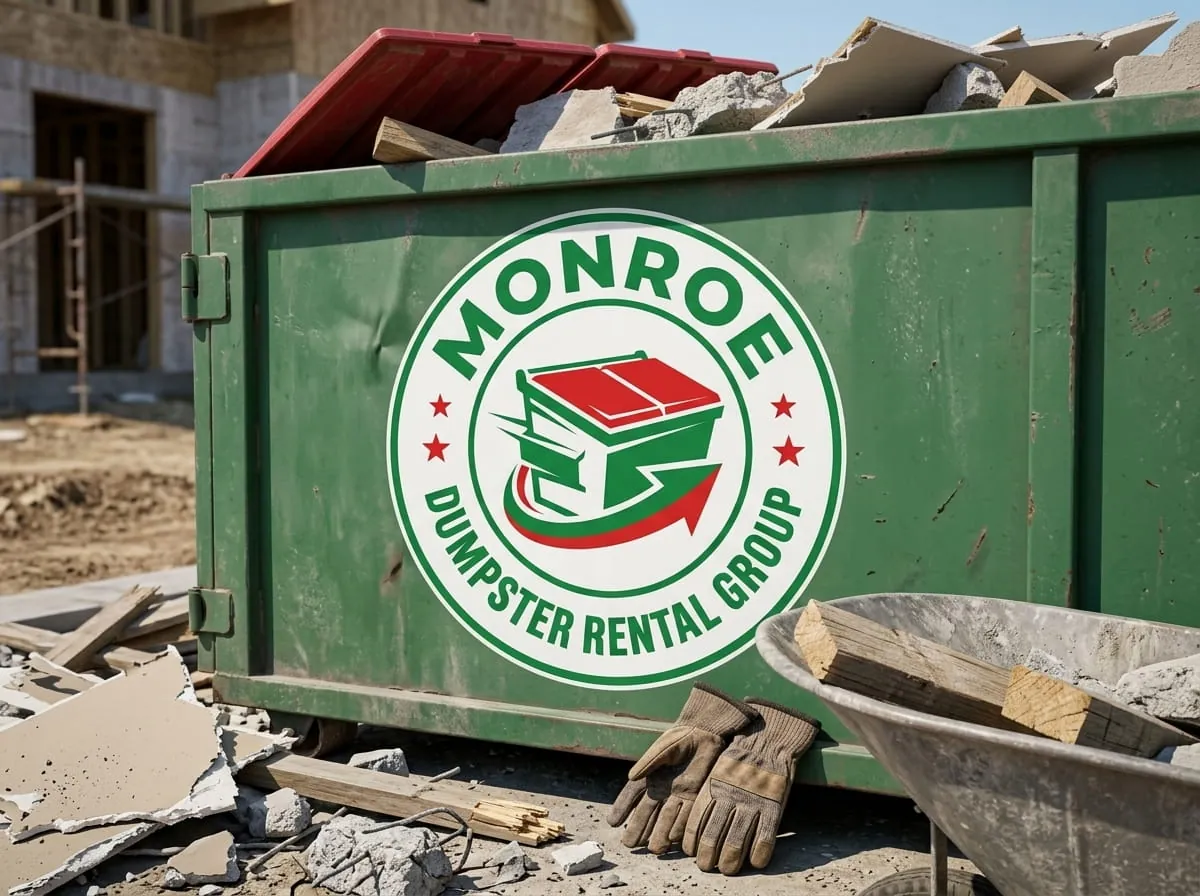
If you are planning a garage cleanout, a roofing tear-off, or a full home renovation in Monroe, one of the first questions that comes up is whether you need a permit to have a roll-off dumpster dropped off. It is a smart question to ask, because the answer changes depending on exactly where the dumpster will sit. In most residential jobs across Union County the answer is a simple no, but there are real situations where a permit is required and skipping it can cost you. This guide walks through when a permit applies, when it does not, how the general right-of-way process works, and how homeowner association rules fit into the picture across the fast-growing Charlotte-metro suburbs.
A quick note before we start: rules change, and every municipality handles them a little differently. Treat everything below as a general overview and always confirm the current requirements directly with the City of Monroe or Union County before your delivery date. When you rent from us, you can also just call (980) 446-2528 and we will help you figure out what applies to your specific address.
The Short Answer: It Depends on Where the Dumpster Sits
The single factor that decides whether you need a permit is whether the dumpster will rest on private property or on public property. If the container sits entirely on land you own or control, such as your driveway or a private parking lot, you generally do not need a permit. If any part of the dumpster sits on a public street, a public sidewalk, or the strip of land the city or county controls between the sidewalk and the road, then a permit is almost always required.
That in-between strip has a name that trips a lot of people up: the public right-of-way. It often looks like part of your front yard, including the grass between the curb and the sidewalk, but legally it belongs to the municipality. Placing a heavy container there without approval is what creates the need for a permit, not the dumpster itself.
When You Do NOT Need a Permit in Monroe
For the large majority of homeowners we serve, no permit is needed because the dumpster never touches public property. Here are the common scenarios where you are typically in the clear:
- Your own driveway. A roll-off placed fully on your paved or gravel driveway sits on private property, so no permit is usually required.
- A private parking lot. Businesses and multi-unit properties can often place a container on their own lot without city involvement, though the property owner or manager should approve it.
- A cleared area on your land. Some Union County properties have room to set a bin on a side yard or a graded pad well off the road.
A Word About Monroe's Red-Clay Yards
Just because you can legally place a dumpster on your own land does not mean any spot will work. Monroe and the surrounding county are known for dense red-clay soil that turns slick and soft after rain. A loaded roll-off can weigh several tons, and setting one on saturated clay or an unstable slope can leave ruts, sink the wheels, or damage a septic field. We almost always recommend a driveway or a firm, level surface, and we bring boards to protect the surface underneath. If your only option is bare yard, tell us in advance so we can plan the safest placement.
When You DO Need a Permit (Public Streets and Right-of-Way)
A permit generally becomes necessary the moment the container has to occupy public space. The most common reasons this happens include:
- No usable driveway. Older homes near downtown Monroe and some tight in-town lots simply have no room, so the only place for a dumpster is the street.
- A shared or blocked driveway. If the driveway is needed for daily parking or is too short for a roll-off, the street may be the only realistic option.
- Blocking a sidewalk or travel lane. Anything that sits on a public walkway or narrows a street typically requires approval and may need safety markings.
When a dumpster occupies a street or right-of-way, the city or county wants to know it will be placed safely, will not obstruct traffic or drainage, and will be reflectorized or marked so drivers can see it at night. This is where the encroachment or right-of-way permit comes in. Streets in downtown Monroe, in particular, tend to be narrower and busier, so expect more scrutiny there than on a quiet suburban cul-de-sac.
The Monroe and Union County Right-of-Way Permit Process
While the exact forms and fees change over time, the general process for a street placement follows a predictable path. Knowing the outline helps you plan ahead so a permit does not delay your project.
Figure Out Who Has Jurisdiction
The first step is confirming which authority controls the road in front of your property. A street inside Monroe city limits is usually handled by the City of Monroe. A road in an unincorporated part of Union County may fall to the county, and a state-maintained road can involve the North Carolina Department of Transportation. The address determines the answer, and it is worth a quick phone call to be sure.
Apply Before Delivery
Once you know the jurisdiction, you or your dumpster provider submit a right-of-way or encroachment application. Expect it to ask for the property address, the placement location, the size of the container, and the rental duration. Some applications require basic proof of insurance, which a reputable, insured hauler can supply. Fees vary, and permits are typically issued for a set number of days, so line up your rental window to match.
Meet the Safety Conditions
Approval usually comes with conditions: keep the container clear of intersections, hydrants, and storm drains; do not block driveways or sidewalks; and mark the bin with reflective tape or cones so it is visible after dark. Following these terms keeps you compliant and, more importantly, keeps your neighbors and passing drivers safe.
HOA Rules in Charlotte-Metro Subdivisions
Here is the twist that catches a lot of Union County homeowners off guard: even when the city and county do not require a permit, your homeowner association might have its own rules. The Charlotte metro is booming, and the newer subdivisions across Monroe, Waxhaw, Indian Trail, Wesley Chapel, and Marvin are almost all governed by an HOA with an architectural or property-standards committee.
These private rules are separate from any government permit and can be stricter than city code. Common HOA provisions include:
- Advance notice or approval before a dumpster arrives.
- Placement limits requiring the bin on the driveway rather than the street or lawn.
- Time caps on how many days a container can remain visible.
- Screening or condition rules about debris, overflow, and keeping the site tidy.
Because HOA covenants are enforced by fines rather than tickets, it pays to check your community's guidelines and notify the board before your delivery. A five-minute email to your HOA manager can save you a violation letter later. This step is easy to forget in a brand-new subdivision where the rules feel informal, but the covenants are binding from day one.
How Monroe Dumpster Rental Group Helps
Sorting out permits, right-of-way rules, and HOA covenants is exactly the kind of thing we handle every day, so you do not have to become an expert. When you call us, we start by asking where the dumpster will go, then help you determine whether a driveway placement keeps you permit-free or whether a street drop means you should contact the city or county first. We are locally based, licensed, and insured, which matters when a permit application asks for proof of coverage.
We serve homeowners and contractors throughout Monroe, Union County, and the wider Charlotte metro with straightforward, flat-rate roll-off rentals and no surprise fees. If you want to talk through placement on a red-clay lot, size options for a renovation, or what your HOA is likely to expect, explore our full range of dumpster services or our dedicated residential dumpster rental page. We will always point you to confirm the final permit details with the city or county, but we will make sure you know what to ask.
Ready to book or have a permit question? Call Monroe Dumpster Rental Group at (980) 446-2528 or reach us through our contact page, and we will help you get the right dumpster in the right spot, the right way.
Founder, Monroe Dumpster Rental Group — sharing straight advice from more than 15 years of local hauling experience.